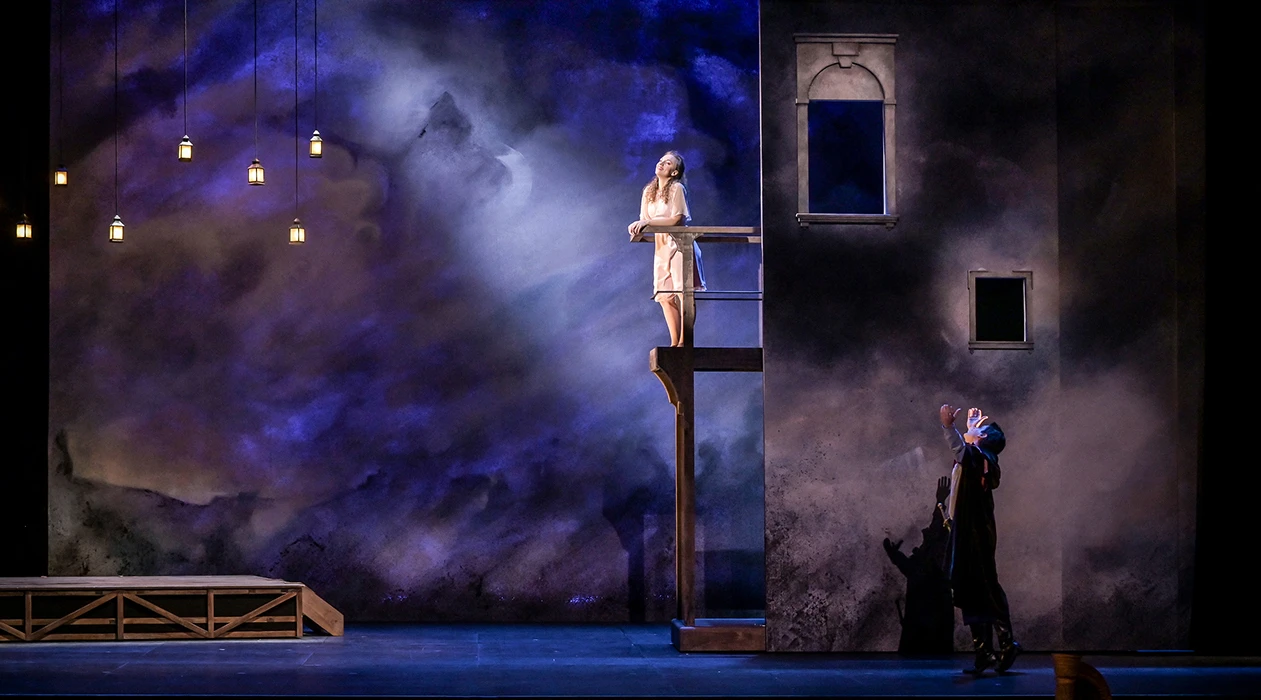
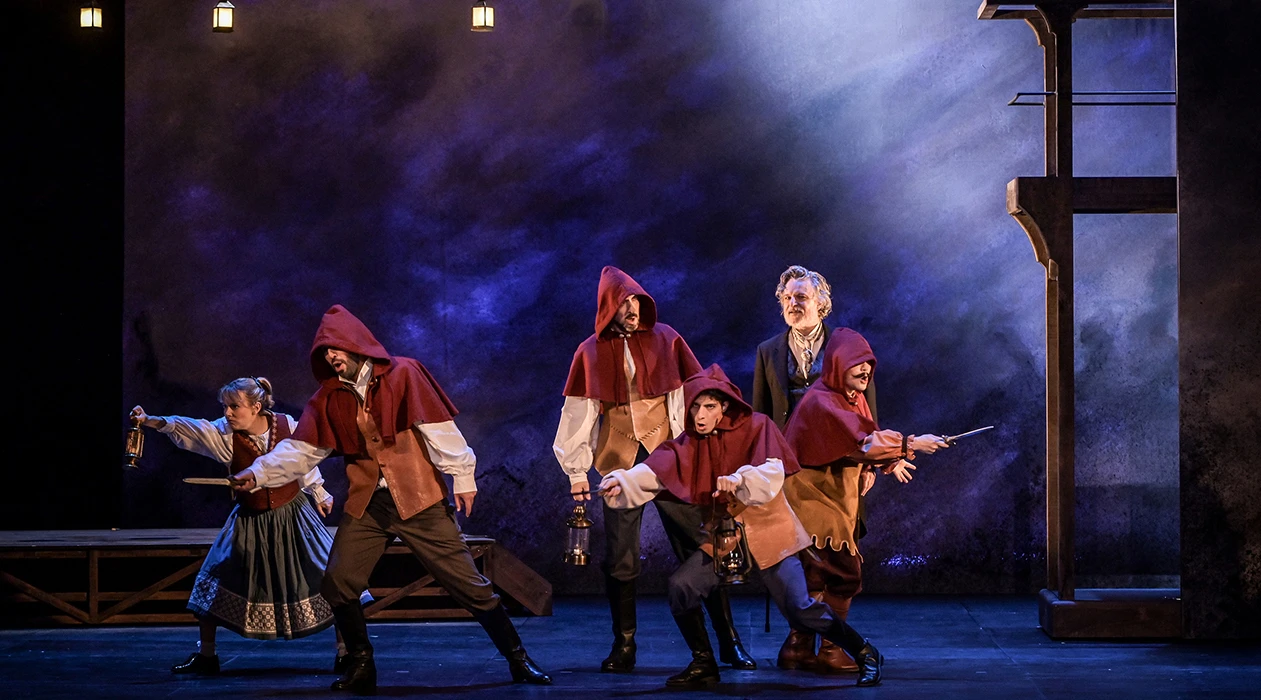
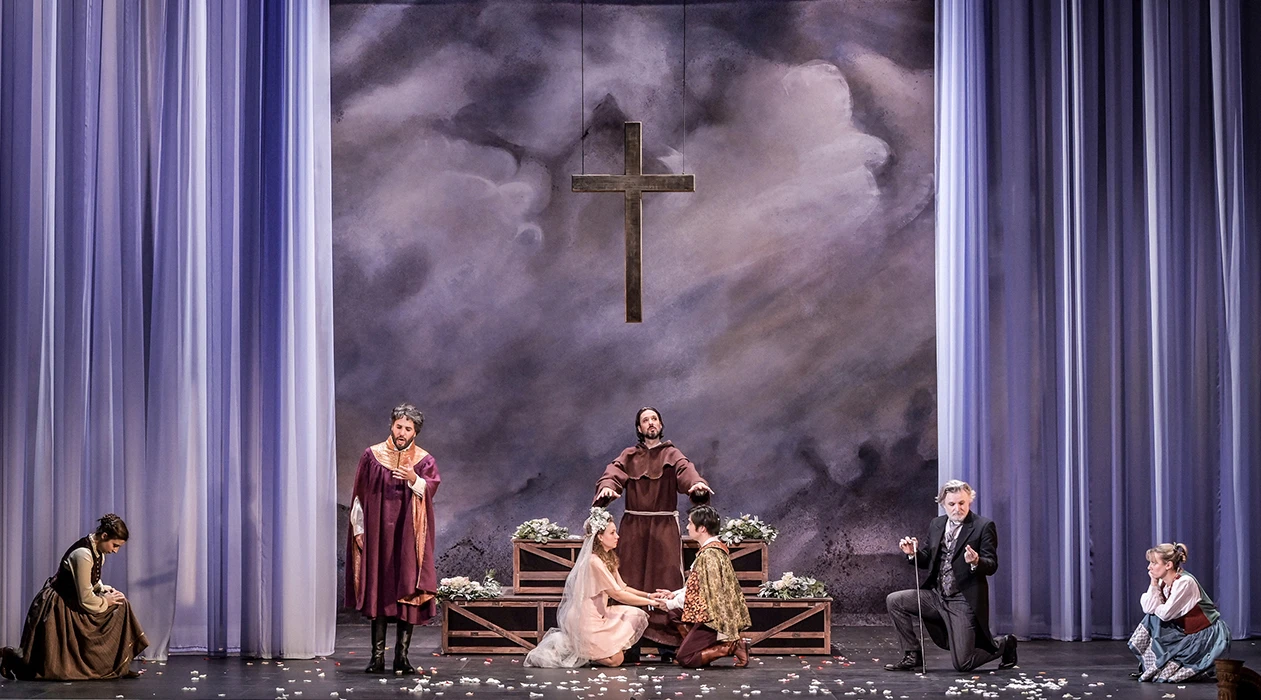
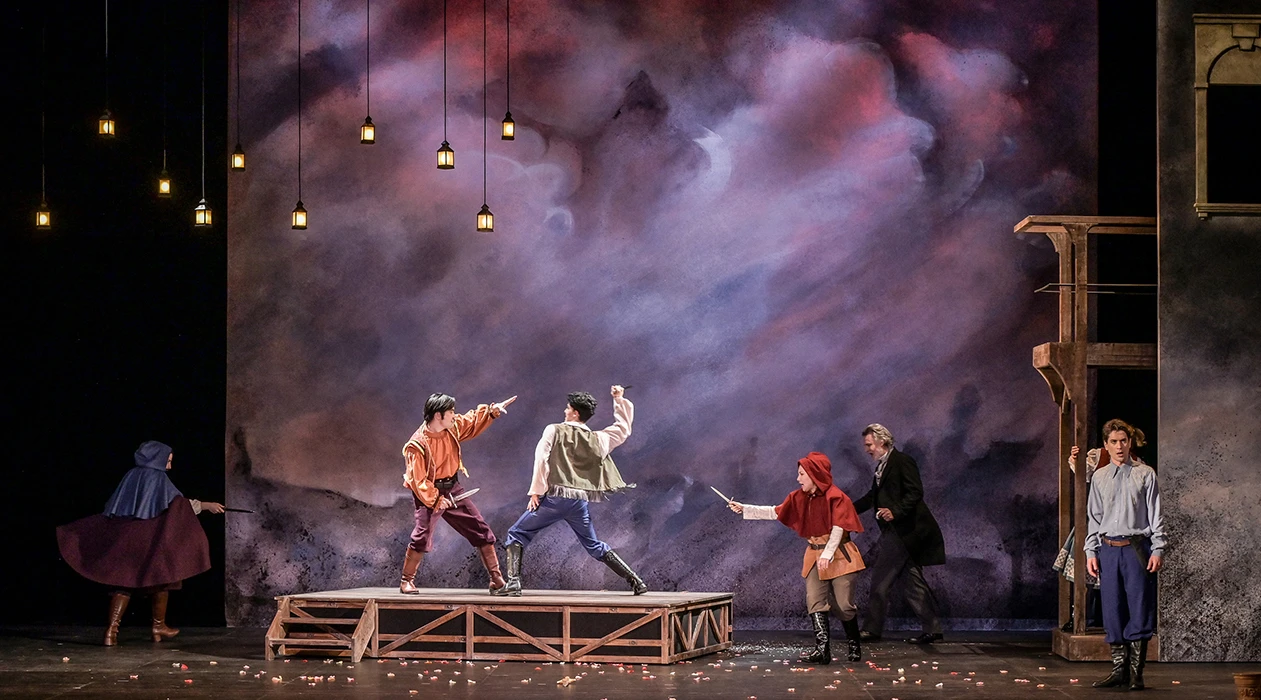
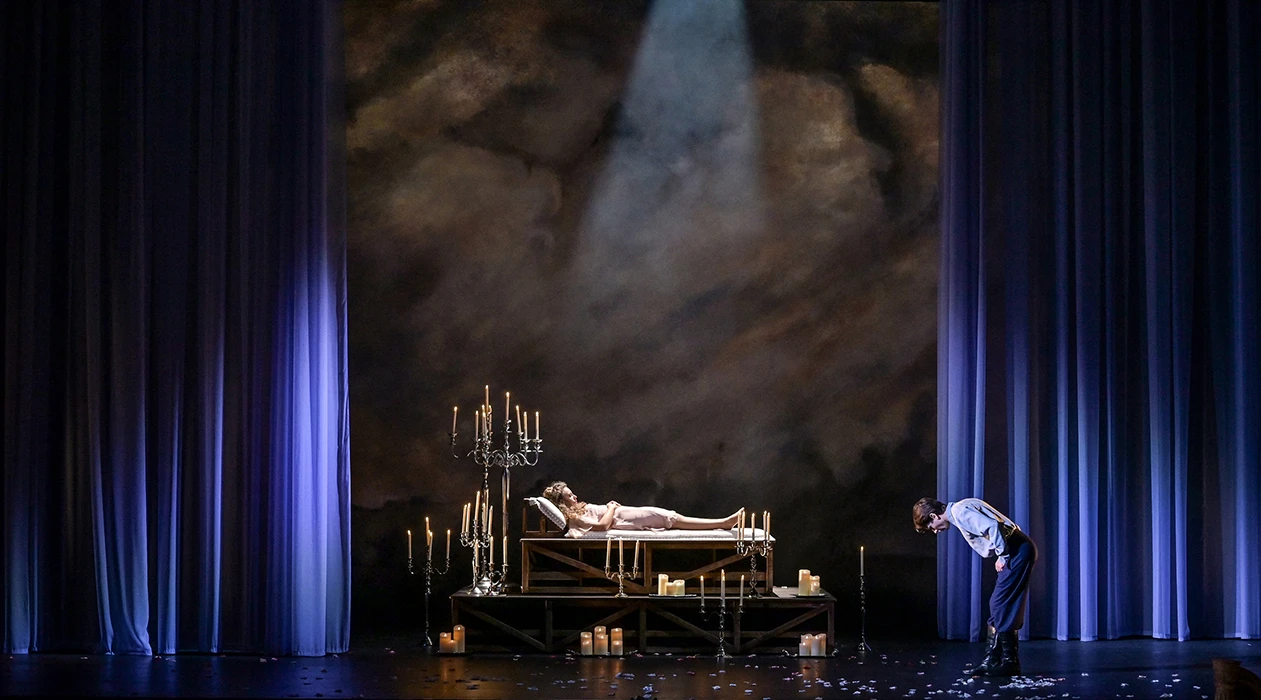
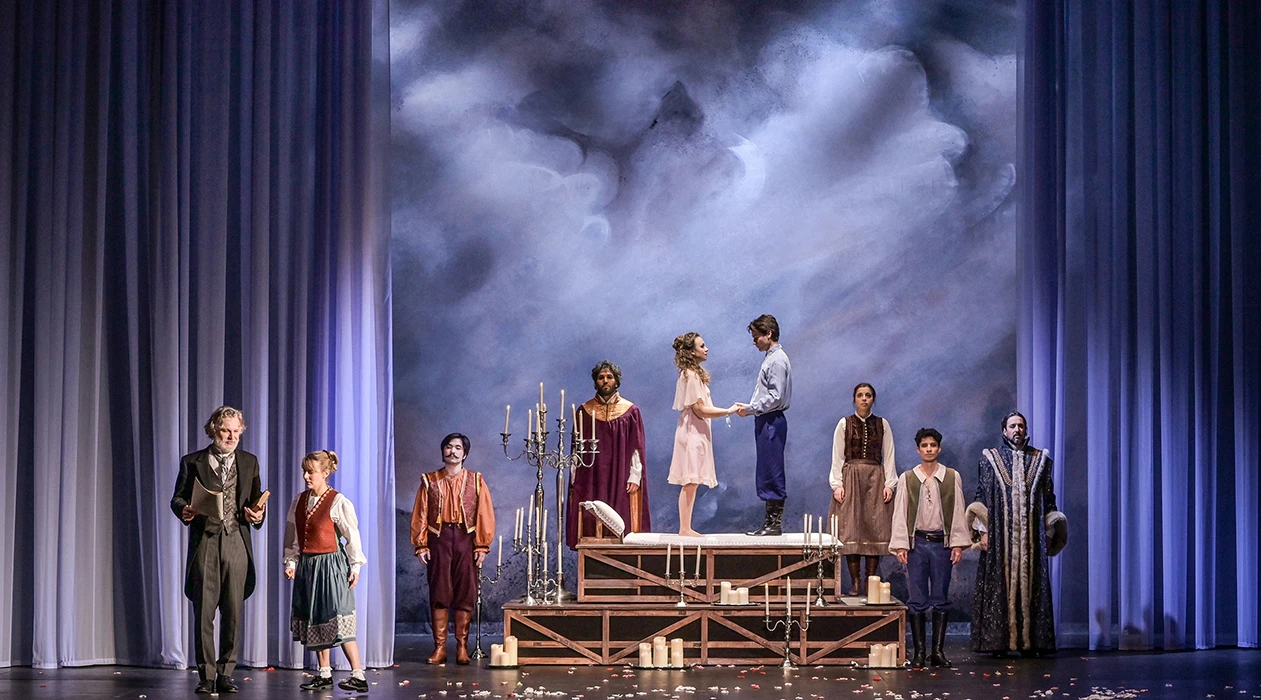
Johanna Boyé’s production is a model of fidelity. The sets (as simple as they are effective) and period costumes, along with direction that follows the narrative to the letter: everything is carefully crafted to make the story easy to follow.
Roméo et Juliette, based on Gounod
Staging Johanna Boyé
Dramatic Approaches to Adaptation for Young Audiences
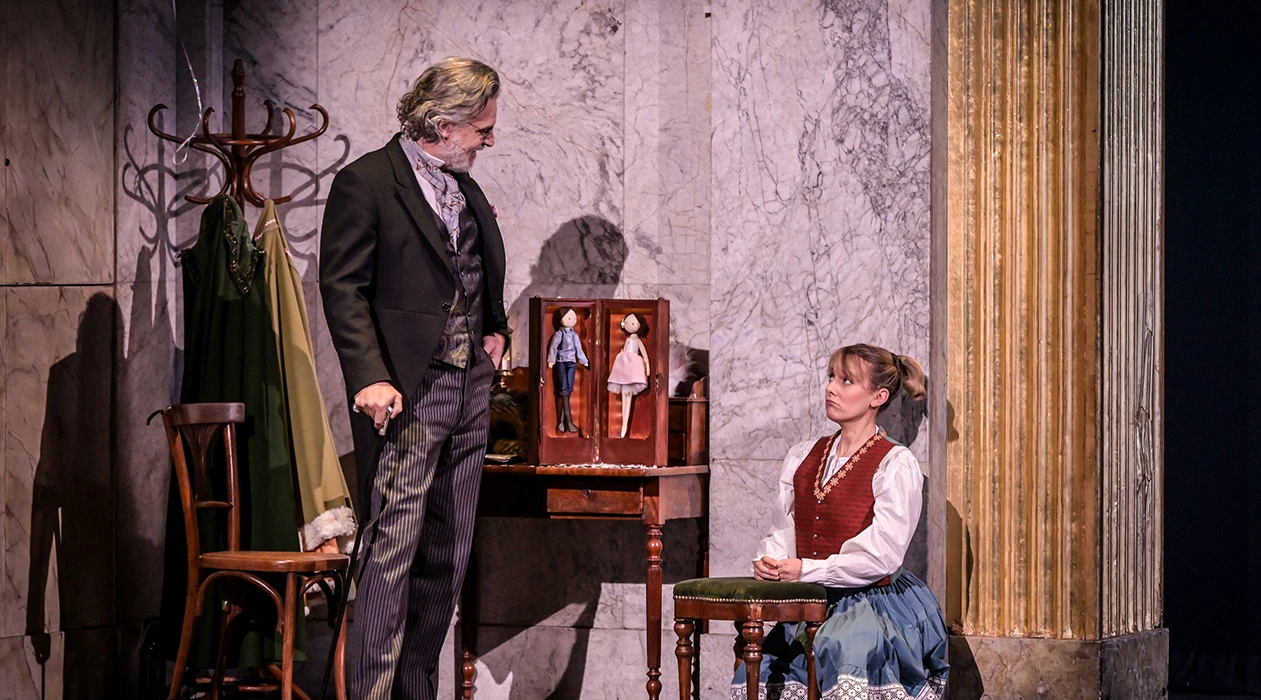
Johanna Boyé and Elisabeth Ventura’s adaptation is based on a mise en abyme technique. The composer Charles Gounod appears as one of the characters in the show: to celebrate his niece Juliette’s birthday, he tells her Shakespeare’s story using two dolls (Romeo and Juliet) while envisioning his future opera. The dramaturgy thus rests on this dual temporality: on one hand, that of the opera inspired by Shakespeare; on the other, the composer’s narrative to his young niece. This device allows for the simplification of certain passages and helps guide younger audiences in understanding and following the story. In the end, the characters of Romeo and Juliet revert to being mere puppets, creating a sense of distance from the drama. Charles Gounod thus reminds us that this is a story that, while tragic, is meaningful: through the sacrifice of the two lovers, it highlights the value of love and enables reconciliation between the feuding families.
Set Design & Costumes
The set design, conceived by Caroline Mexme, is based on a deliberately minimalist and modular setup, allowing for quick transitions between the various locations in the plot. Large veils and transparent curtains divide the spaces, while a balcony and a wooden platform serve alternately as a public square or an interior space. A lighting motif appearing in various forms (lanterns, chandeliers, torches, candles) in each visual space, along with emblematic props (letters, swords, costume elements), help to situate the scenes.
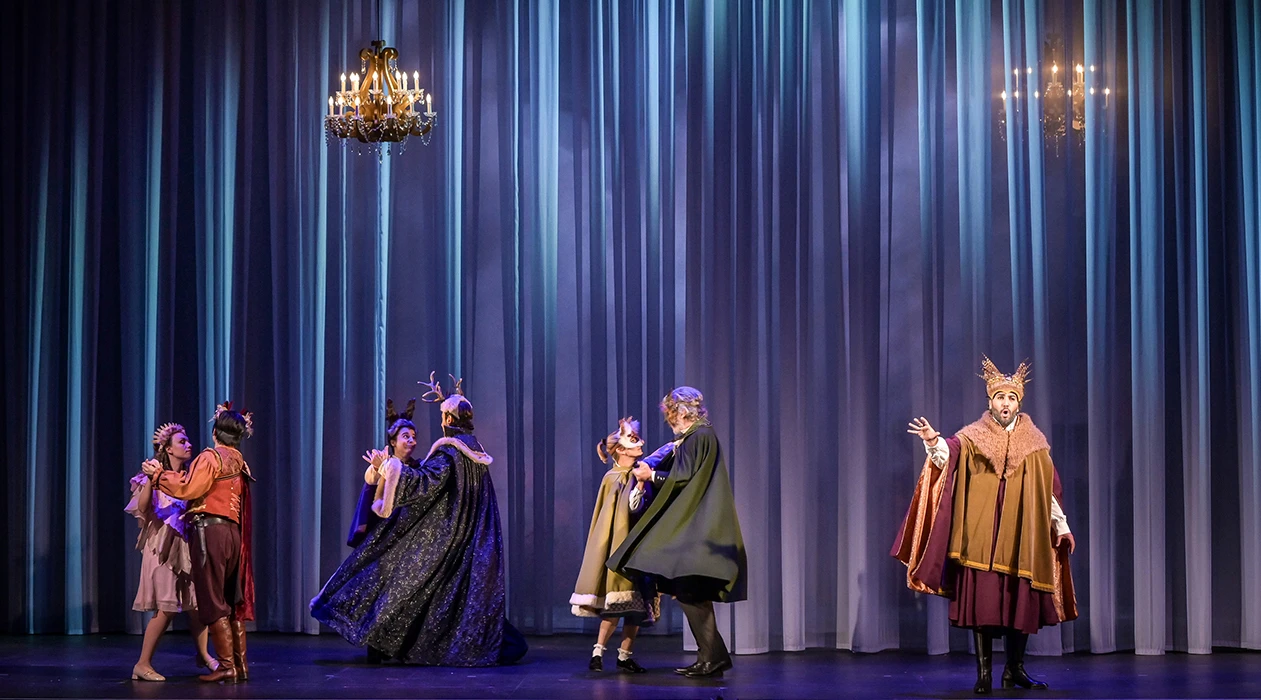
Marion Rebmann’s colorful, stylized costumes draw inspiration from fairy tales and fables—capes and masks in distinct colors—facilitating the immediate identification of characters and their affiliations with different factions (Capulets, Montagues, figures of authority...).
Dans la presse


Charles Gounod’s Romeo and Juliet is adapted with elegance and imagination by director Johanna Boyé.

A deep respect for Gounod’s opera and its main arias, but also a bold touch. The idea is as effective as it is elegant.
Documentation disponible
- Programme : see
- teacher's guide
- Schoolchildren's guide
- Booklet for learning songs
- Video Tutorial for Learning Songs
- Interviews
(c) photos : Vincent Pontet
Fiche technique
Date de la création
Equipe artistique
Soloists, choir, performers